










Shop For INR 28,000 & above & Get Flat INR 2200 Off
Code: SHOPMORE28K





 Speak to our stylist
Chat with us on +919773983391
 Loyalty Rewards
Cart
Shop For INR 28,000 & above & Get Flat INR 2200 Off
Shop For INR 45,000 & above & Get Flat INR 4200 Off
Shop For INR 1,20,000 & above & Get Flat INR 10,000 Off
Shop For INR 1,75,000 & above & Get Flat INR 12,000 Off
 Free Shipping Across India
 100% Pure Fabric
 COD Available
 Delivering Worldwide
Your cart is empty
We all have a saree or lehenga folded at the bottom of our wardrobes that has not seen daylight in years. It comes out occasionally - for a wedding, or for a special occasion. Every time it does, it feels special. You have memories flooding in. The outfit could be forty years old, but still breathtaking! It does way more in a single wearing than most modern clothes could ever manage in a lifetime. That’s Heritage Indian wear for you.
These are not just outfits - heritage Indian wear like a brocade saree, a heavily embroidered lehenga, or a silk zardozi sharara carries memory in their weave and time in their texture. But it only does that work if it has been cared for properly, consistently, and with the kind of attention we give to things we intend to keep forever.
This is the care guide most of us never received - the one that tells you not just how to wear your most precious pieces, but also how to make sure they survive you.
Heritage Indian wear is not simply old clothing. Heritage wear is created using traditional craft techniques - they are handcrafted by skilled artisans. These techniques are irreplaceable precisely because they cannot be industrialised without losing what makes them remarkable.
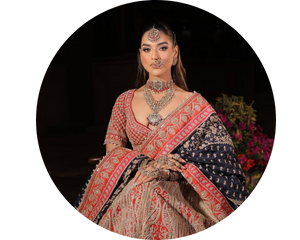
A saree woven on a handloom in Varanasi uses centuries-old Banarasi weaving techniques. A lehenga adorned with Kashmiri Tilla embroidery involves fine metallic threads embroidered by artisans whose families have practiced the craft for generations. A kurta carrying Parsi Gara hand needlework - one of the most painstaking embroidery traditions in India - is a wonder in itself. It takes weeks to complete a single outfit with hand embroidery work. A Bandhani kurta tied by hand - thousands of tiny points of resistance against the dye, creating a pattern - this marvel cannot be replicated by machine, honestly.
Heritage outfits are not fashion pieces. They are cultural documents - they represent the land’s heritage in craft and textiles. From Tilla embroiderers of Kashmir, to Bandhani artisans of Rajasthan and Gujarat - they deserve to be treated accordingly for preserving their traditions for generations.
The difference between heritage wear and regular ethnic wear is simple - heritage wear improves with careful keeping. It becomes more valuable over time, not less.
This is not even a suggestion. This is needed. Heritage fabrics like pure silk, raw silk or Chanderi silk require special tender loving care. Heritage outfits, particularly those carrying hand embroidery, metallic threadwork, or delicate weaves, cannot withstand the agitation and water saturation of machine washing. Find a dry cleaner who understands heritage textiles, not one who treats everything the same way.
After wearing, let your outfit breathe for several hours before folding it away. This releases body moisture and prevents the kind of slow damage that builds invisibly over time. You can air it indoor under a fan.
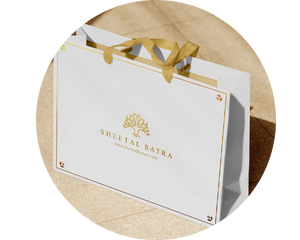
Plastics are a no-no when it comes to heritage wear in luxury silk fabrics. Plastic traps humidity and creates an environment where the fabric deteriorates. Wrap your heritage pieces in soft cotton muslin, which allows the fabric to breathe while protecting it from dust. Sheetal Batra's packaging already does this, and it is worth preserving that wrapping for storage.
Heritage wear often comes with heavy and intricate embroideries. The way you care and fold your outfits often determines the life of embroideries. Fold your delicately embroidered outfits in a way that prevents the embroidery from being pressed under the weight of the fabric. Roll rather than fold where possible, and pad the fold lines with soft tissue to prevent permanent creasing.
Most heritage wear uses fine fabrics, natural dyes and embroideries. Sunlight fades natural dyes and weakens delicate fibres over time. Store your heritage pieces in a cool, dark space, ideally in a drawer or trunk away from windows.
Pests like moths are a real pain when it comes to fabrics and linens. Use neem leaves, dried lavender, or cedar blocks rather than synthetic mothballs, which leave chemical residues that can damage fine textiles.
We don’t wear heritage wear regularly. It only comes out occasionally. But storing and forgetting them isn’t a good idea either. Every few months, unfold your stored heritage pieces and refold them differently. Permanent fold lines form when fabric sits in the same position for years, and these eventually become weak points in the cloth.
Here’s a bonus tip you should not miss.
Document what you own.
Photograph each piece and note the craft technique, the occasion it was worn, and where it came from. This turns a wardrobe into a record - and makes the inheritance of these pieces meaningful rather than arbitrary.
Your heritage wear will survive longer when you treat it as something worth surviving. Never throw your heritage outfit in a washer dryer. Never store them carelessly. Handle your heritage wear not just with care, handle them with awareness.
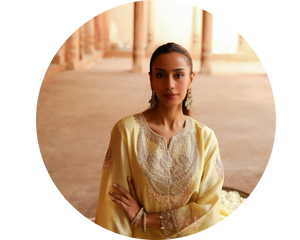
That is the spirit Indian heritage wear requires. Each of Sheetal Batra’s outfits are made on luxe fabrics like high-quality Chanderi silk, pure silk, upada silk, raw silk and more. Legacy embroideries like Kashmiri Tilla, Kirandori, Parsi Gara, Zardozi are done on each outfit by hand often taking days to finish a single outfit. The combination of exquisite hand embroidery and fine fabrics make each of our outfit a heritage wear that can be passed on to the next generation. All they ask of you is the care to match it.