







Shop For INR 28,000 & above & Get Flat INR 2200 Off
Code: SHOPMORE28K





 Speak to our stylist
Chat with us on +919773983391
 Loyalty Rewards
Cart
Shop For INR 28,000 & above & Get Flat INR 2200 Off
Shop For INR 45,000 & above & Get Flat INR 4200 Off
Shop For INR 1,20,000 & above & Get Flat INR 10,000 Off
Shop For INR 1,75,000 & above & Get Flat INR 12,000 Off
 Free Shipping Across India
 100% Pure Fabric
 COD Available
 Delivering Worldwide
Your cart is empty
India is a land of textiles and unique embroideries. While some are deeply rooted in history, some have travelled from distant lands. Parsi Gara is one such embroidery tradition that has travelled a long way from Persia to India, yet even today, the soft elegance of Gara embroidery is celebrated in the ethnic fashion industry. It carries the fingerprints of three civilisations in every motif. Parsi Gara embroidery, by almost any measure, is one of the most extraordinary needlework traditions in the world.
In this blog, let us take you through the journey that Parsi Gara embroidery has had and share with you how it became inseparable from Parsi sarees and suits.
To understand Parsi Gara, you have to go back to the 19th century and follow a community in motion.
The Zoroastrian Persians who had fled religious persecution in Iran settled primarily in Gujarat. By the 1800s, Parsis became one of the most active trading communities in India.
They traded opium and cotton with China in exchange for tea, which was in high demand across Europe. These were often long journeys across sea routes.
The merchants also came back with Chinese silk - specifically a heavily embroidered fabric featuring realistic flora and fauna designs. Birds, butterflies, chrysanthemums, peonies, and pagodas were trademark Chinese motifs practised at that time.

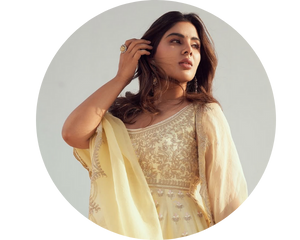
Shop Now: Kaina- soft blue pure chanderi silk parsi-gara embroidered ensemble
Since the Parsis settled in Gujarat, the name of the embroidery is heavily influenced by the Gujarati language. Gara comes from the word Garo, which in Gujarat means saree. Since these sarees were made by the Parsis, they came to be known as Parsi Gara, which literally means Parsi sarees.
But such is the impact of the embroidery that this beautiful needlework itself got its name - the Parsi Gara embroidery.
The first thing you notice about Parsi Gara embroidery, when you see it up close, is the realism. It is not stylised or abstract needlework. In Parsi Gara embroidery, the flowers look like flowers, birds have individual feathers, a peacock mid-display of its feathers looks real. Parsi Gara has the quality of paintings executed in thread.
This is possible because the Parsi Gara technique draws on multiple embroidery schools simultaneously.
Some of the stitches used in Parsi Gara are
Persian satin stitch and long-and-short stitch
Chinese chain stitch
Parsi seed stitch, called khakho (forbidden knot)
French knots
Crepe Stitch
Each of these stitches is distinct, fine, and labour-intensive. The embroidery is so fine that it was historically associated with the loss of eyesight in the women who practiced it.
In Parsi Gara embroidery, each stitch serves a different purpose:
filling large areas of colour
building gradation
creating texture at the edges of petals and feathers
In traditional Parsi Gara embroidery, only silk threads are used. Embroideries are usually done on a dark base. Traditionally, Parsi Gara was done on black, violet, deep red, deep blue, or forest green bases.
But in contemporary times, white on pastel shades have become increasingly popular.
On a pastel shade like daisy ivory or blush pink, the embroidery has a different quality entirely - softer, more romantic, still extraordinary.
Very fine needles are used for the delicate Parsi Gara embroidery.
This intricate embroidery requires detailing, precision, and lots of patience.
The process begins with Khaka, where intricate embroideries are traced onto the fabric using tracing paper and a mix of kerosene and white zinc.
The fabric is then stretched over the wooden frame, Karchob.
Fine silk threads are used to create the embroideries, consisting of different stitches like Crepe Stitch to create the smooth painted effect.
A single Parsi Gara saree can take anywhere from six months to over a year to complete because of this labour-intensive process. Every single embroidery is done by hand.
Even though it looks delicate, Parsi Gara embroidery is quite durable, making a Parsi Gara outfit a multi-generational heirloom piece.
Today, Parsi Gara suits and kurtas are equally popular among women as the Gara sarees.

Shop Now: Kareena Kapoor in sanvi - blush pink long choga with salwar
Parsi Gara motifs are as distinct as their names. The motifs get their names from the Parsi traditions, making them unique and interesting.
Cheena Cheeni - Parsi Gara has its roots in Chinese silk fabric. One of the classic motifs, called Cheena Cheeni, depicts a Chinese man and woman set against a backdrop of pagodas, bridges, and plantations. The Cheena Cheeni motif is almost a visual record of the trade relationship between the Parsis and China, rendered in silk thread.
Kaanda Papeta - Not just flora and fauna, Parsi Gara even includes motifs inspired by foods! Kaanda papeta literally translates to onions and potatoes! This motif is a playful, self-deprecating name for a polka-dot pattern that someone in the community apparently decided resembled the household staples that appeared on every Indian table. This kind of humour embedded in needlework is quintessentially Parsi and quintessentially delightful.
Marga Margi - This motif depicts a rooster and a hen - an auspicious symbol for togetherness and domesticity.
Chakla Chakli - This is a motif depicting male and female sparrows. It represents love, and harmony.
Karoliya - This interesting motif refers to a spinning wheel or a unique web by a spider. It typically features a central point and spokes radiating outwards.
Floral Patterns - Roses, lotuses, chrysanthemums, peonies - they appear in volumes in Parsi Gara embroidery. They are influenced by the Persian love of botanical imagery and Chinese precision in rendering it.
Kiku - The name is derived from the Japanese Crysanthemum motif.
Chai Chchatri - Inspired from Chinese rice farmers, this motif involves patterns depicting umbrellas or parasols. They are used mostly to showcase broader oriental scenery.
A Parsi Gara outfit is not just decorated, it is narrated.

Shop Now: Saboor - Blue Short A-line Kurta With Straight Pants And Dupatta
Parsi Gara has seen its ups and downs and revivals, too.
Parsi Gara went out of fashion twice. The first time was during the Indian independence movement, when trade with China was effectively stopped, and the original fabrics and patterns became unavailable. The embroidery went quiet for years.
The second and significant threat is rather gradual and ongoing. The Parsi community in India is small and shrinking. The artisans who practice Gara embroidery are fewer with every passing decade. The long, labour-intensive process has been on a decline because of a lack of skilled artisans.
Some craft organisations and designers have worked to document, preserve, and revive the tradition. They are doing work that matters enormously.
However, contemporary Indian fashion has played its role in the revival of Parsi Gara embroidery too. When Natasha Poonawalla wore Parsi Gara embroidery to the Met Gala, a craft that many people had never heard of, it was suddenly being searched for and sought.
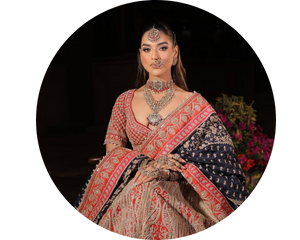
With designers like Sheetal Batra bringing Parsi Gara embroidery to life on suits, Anarkalis, and kurtas, modern Indian women are getting a slice of what used to be celebrated as tales on thread.

Shop Now: Sameeha - Off Rose Short Kurta With Sharara
At Sheetal Batra, we celebrate Parsi Gara embroidery and design suits and kurtas specifically to give the embroidery the respect it deserves.
The fabrics chosen for Parsi Gara work at the brand are not incidental. Silk Chanderi, dupion silk - each responds to Gara needlework the way the tradition demands. Our Parsi Gara needlework is not just limited to sarees; from stunning Anarkali suits to sharara sets, you can find mesmerising Parsi Gara embroidery in a variety of ethnic outfits at Sheetal Batra.
When you wear an outfit with Parsi Gara work, you are not just wearing an ethnic outfit - you are wearing the result of a trade journey that began two centuries ago. Parsi Gara embroidery is the needlework knowledge of three civilisations; it is the fruit of the labour of artisan hands that have spent decades learning to make thread behave like paint on canvas.
Parsi Gara embroidery on each Sheetal Batra outfit is the same, whether the garment is for a bridal occasion or a festive evening, because Parsi Gara does not have a lesser version.